
How to Track Calories in Homemade Meals (Without Weighing Everything)
Learn practical ways to estimate calories for home-cooked dishes without weighing ingredients. Simple methods & tools that make tracking sustainable.
The Buzzkill Moment
You just made an incredible dinner. Maybe a curry, a pasta, or a detailed rice bowl. It smells amazing.
Then you pull out your phone. The dread sets in.
Do you weigh the chicken now or did you weigh it raw? How much oil stayed in the pan? That sauce has four ingredients, do you log them all separately?
By the time you figure it out, your food is cold. And you are just a little bit more likely to quit tracking tomorrow.
The Math Problem
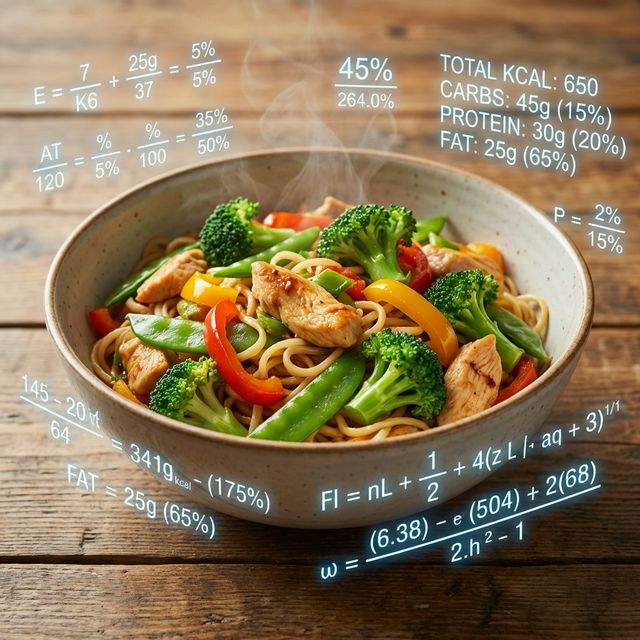
The standard advice is to "deconstruct" your meal. Weigh every ingredient. Add them up. Weigh the final batch. Divide by your serving size.
Is it accurate? Yes. Is it sustainable? Absolutely not. It turns cooking into a math exam.
Stop Trying to Be Perfect
Here is the secret: You do not need to be 100% accurate. You just need to be consistent.
In nutrition research, small estimation errors matter far less than long-term adherence.
If you are off by 10%, it barely matters. If you track *most* of your meals for six months, you will win. If you track *perfectly* for two weeks and then quit, you lose.
Three Ways to Fix It
You don't have to be perfect. You just have to be close enough.
- 1. The "Close Enough" Match:Don't log ingredients. Search "Chicken Curry" or "Pesto Pasta" and pick an average entry. It is fine.
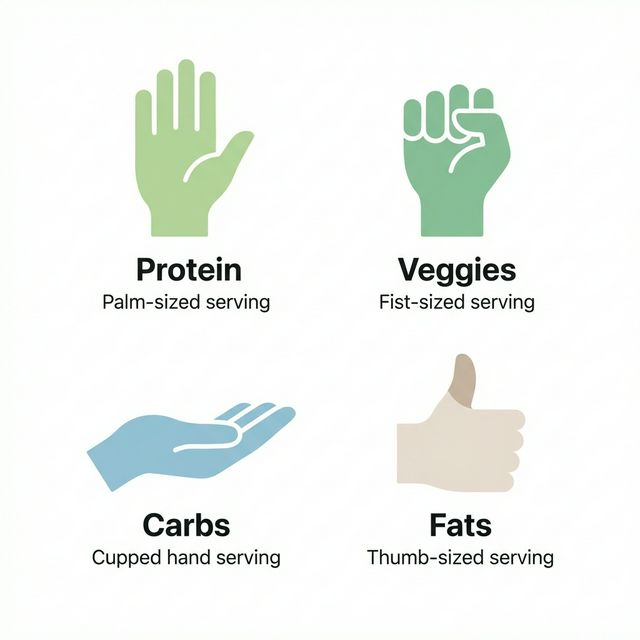
- 2. The Hand Method:Palm = Protein. Fist = Veggies. Cup = Carbs. Thumb = Fats. No scale needed.
- 3. Let Technology Help:Newer tools can estimate meals visually from a photo, removing the ingredient math entirely. Macrite is our attempt to make that practical.
Use Your Hands
The hand method is the best backup plan. You always have your hands with you.
Example: Logging a Homemade Curry
Let's say you made a chicken curry. Instead of weighing every spice and vegetable, try this:
- Step 1:Estimate your protein (about a palm size?).
- Step 2:Lump the veggies together (about two fists?).
- Step 3:Search for a generic "Chicken Curry" entry in your app and log 1.5 servings if yours looks bigger.
- Outcome:You get a rough ~10% estimate that is *good enough* to keep you on track, and your food is still hot.
Just Eat Your Food
Tracking should be a tool that helps you, not a chore that gets in the way of your life.
Next time you sit down to a meal you cooked, put the scale away. Take a photo or just make a quick guess. Then put your phone down and enjoy your dinner while it is still hot.
The goal is awareness, not perfect accounting. Don't let the numbers burn you out.
Frequently asked
Do I really need to weigh every ingredient?
No. While it is the most accurate method, it is rarely sustainable. Estimating portions or using generic database entries is usually "close enough" for long-term weight management.
Is the hand portion method accurate?
It is surprisingly effective. While not precise to the gram, it provides a consistent baseline for controlling portion sizes without any tools.
What is the best way to log mixed dishes?
Search for a generic entry that closely matches your meal (e.g., "Homemade Beef Stew"), or log the main protein separate from a generic "mixed vegetables" entry.
How does Macrite help with this?
Macrite uses AI to visually analyze your meal from a photo, estimating portions and ingredients automatically so you don't have to do the math manually.